Visitor's Location:

Dedicated To The Memory Of "The Shedden Eight".....

Dedicated To The Memory Of "The Shedden Eight".....
Thanx to the few who left a comment.....

Saturday, September 19, 2026

Outlaw biker who killed 8 Bandidos members in Ontario dies in prison

 An outlaw biker convicted of helping murder eight Toronto-area clubmates in the largest mass murder in modern Ontario history has died in custody of apparent natural causes.

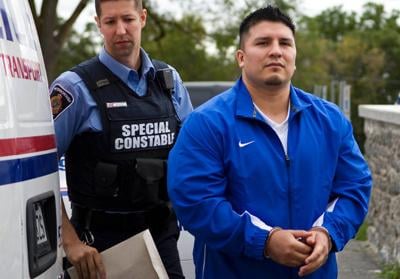
Marcelo (Bull) Aravena, 50, was serving a life sentence when he died on Monday in Bath Institution, a medium-security prison outside Kingston.


His sentence began on Oct. 30, 2009, after he was convicted of seven counts of first-degree murder and one of manslaughter for taking part in the 2006 murders of eight fellow Bandido bikers from the GTA in a barn near Shedden, Ontario, a hamlet outside of London.

The Correctional Service Canada (CSC) will conduct a routine review of his death and notify the coroner, Corrections Canada said in a prepared statement.

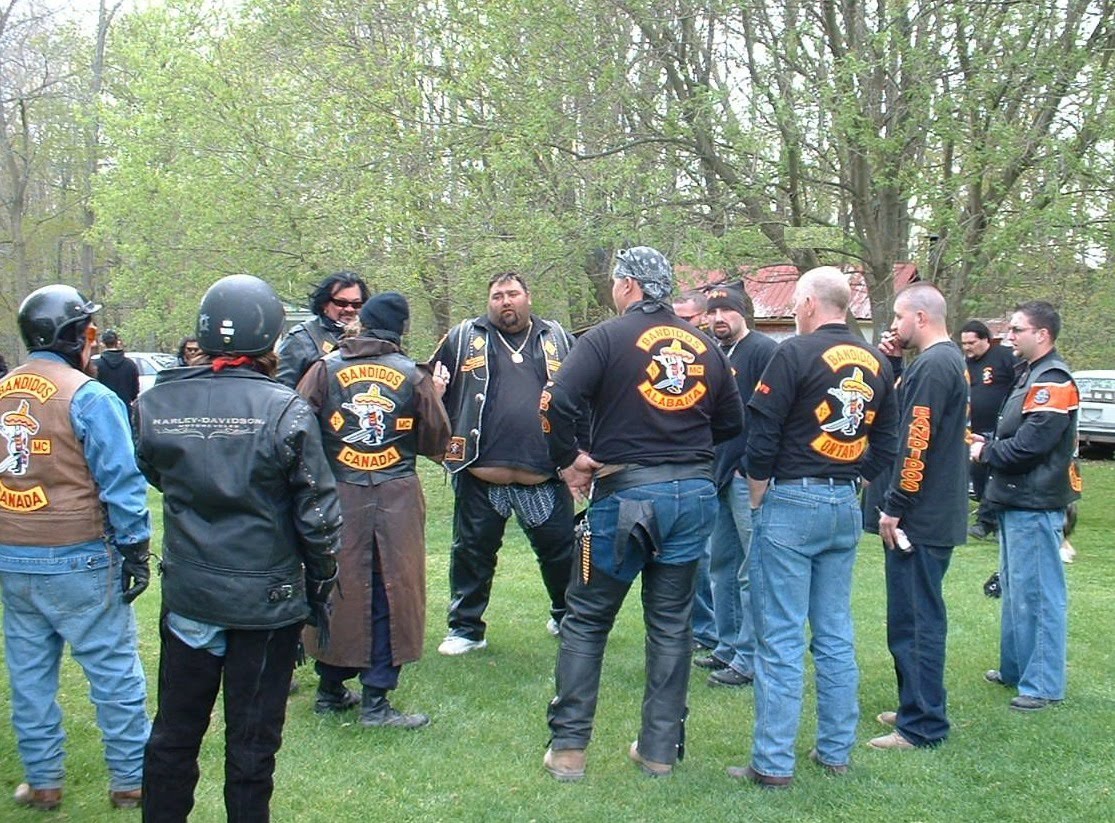
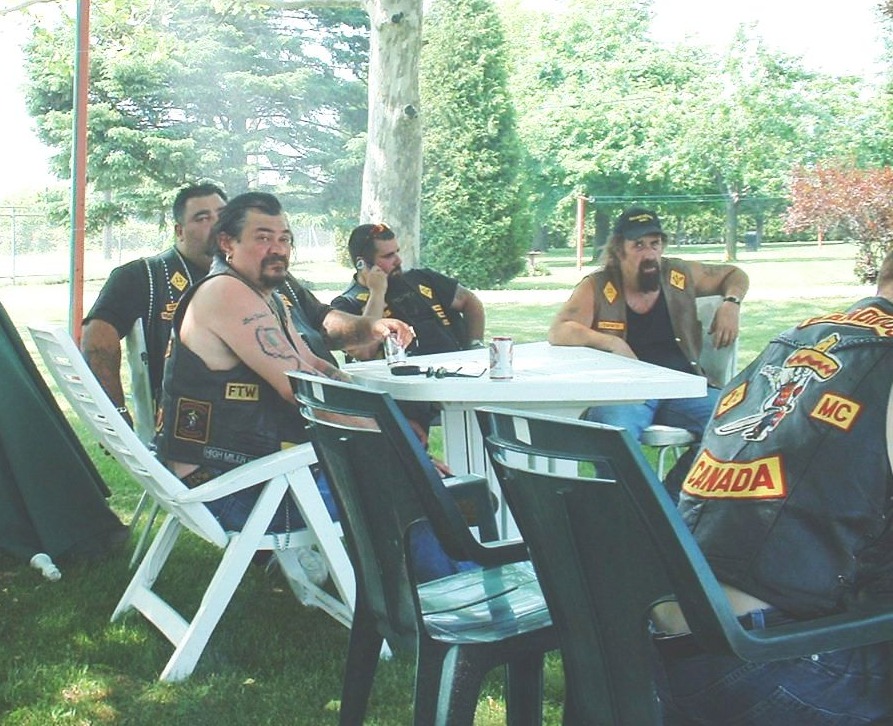
A 280-pound mixed martial arts fighter based in Winnipeg, Aravena was a member of the Bandidos, a Texas-based bike gang that had two chapters in Canada, one in Winnipeg and the other in Toronto.

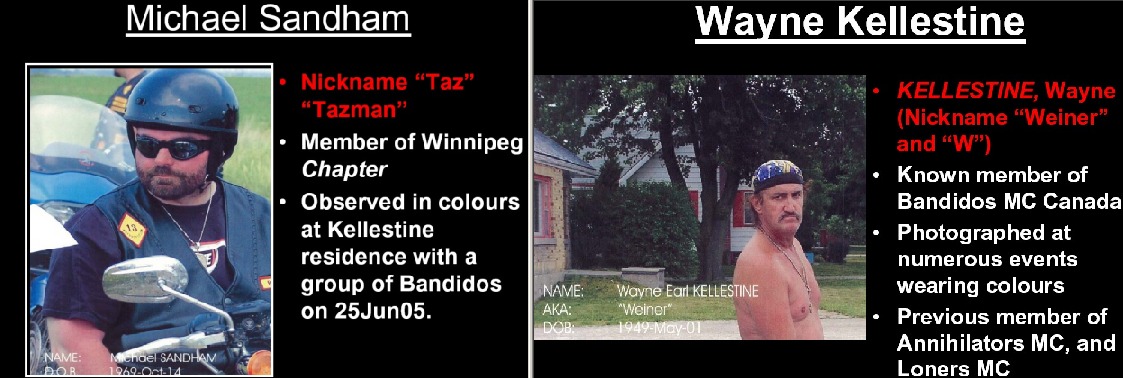
Court heard that longtime outlaw biker Wayne (Weiner) Kellestine had become convinced that he could seize control of the U.S.-based biker gang’s Canadian operation — and a lucrative trade in methamphetamine — if he wiped out most of his fellow Toronto-area members and then pinned the killings on the Hells Angels.

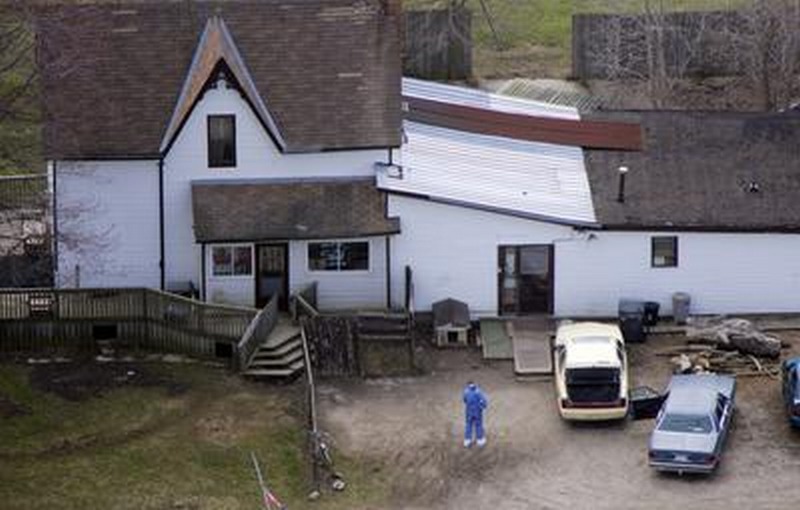
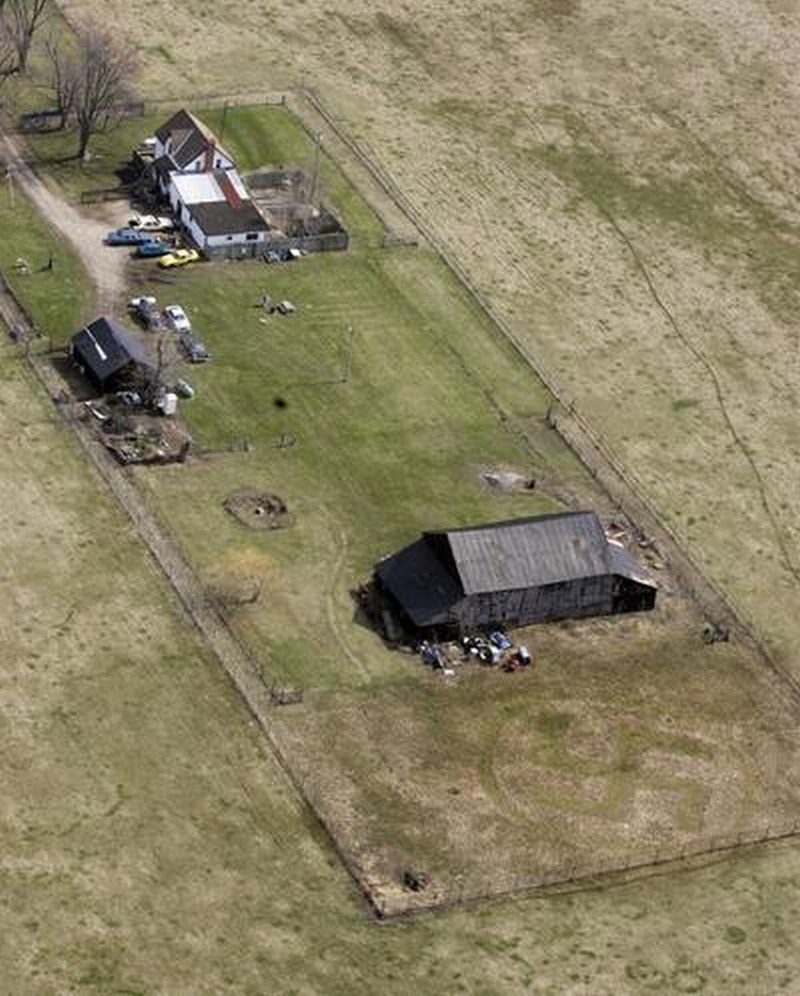
Eight members of the Toronto chapter called “The No Surrender Crew” were murdered on the night of April 7 and 8th, 2006 in Kellestine’s ramshackle barn. Their bodies were stuffed into vehicles in Elgin County in Southwestern Ontario.

Aravena and five other men were tried and convicted in the bike-gang executions.

He chose to make a statement to the families of the victims prior to his sentencing and expressed remorse. “I truly am sorry for what I’ve put you through,” Aravena said. “I know that nothing I can say will bring your loved ones back, but I did not know this was going to happen.”

Aravena then erupted in anger when he heard the guilty verdict.

He spat on his lawyer, Tony Bryant, and shouted obscenities at the jury from the prisoners’ dock after hearing he had been convicted of seven counts of first-degree murder and another of manslaughter for the massacre of the bikers in tiny Iona Station, west of London.

“F -ing goofs,” Aravena shouted, making obscene gestures with both hands.

“You know that some of us are innocent,” Aravena shouted.

A conviction for first-degree murder brings a mandatory life term with no parole eligibility for 25 years.

The jury in the seven-month trial heard that Aravena didn’t fire any shots in the massacre, but the Crown argued he was still a key part of the crime by acting as a guard who helped confine the doomed bikers.

The trial heard that Aravena feared he was about to be murdered himself that night.

M.H., a Bandido biker who cooperated with authorities after the murders, told court that Aravena was often the butt of jokes inside the Bandidos Motorcycle Club and often had to fetch water, cook pizzas, wash dishes and do chores for more senior members.

M.H., who disappeared into a witness protection program after the trial, was present on the night of the murders. He and Bryant sparred over Aravena’s exact status in the club at the time of the killings.

In the end, Maurice Hudson. said, it didn’t really matter. “That night we were all Bandidos,” he told court.

M.H. dismissed a suggestion by Bryant that Aravena “came within a whisper” of being the ninth murder victim that night.

“I didn’t see anybody put a gun to his head,” M.H. said of Aravena. “I didn’t see anybody threaten him, if that’s what you mean.”

Bryant noted that Aravena didn’t even own a motorcycle or have a licence to ride one.

Tuesday, December 30, 2025

Pierre Aragon:

 Pierre Aragon, a former member of the outlaw motorcycle gang the Bandidos and the Loners, was denied bail in October 2022 while awaiting a new sentencing hearing for violent crimes committed on impulse.

He was convicted in 2014 of aggravated assault, assault with a weapon, possession of a weapon, and uttering death threats, stemming from a 2012 beating of a Loners member in Peterborough, Ontario.
Aragon’s criminal record includes eight offences of violence and two firearm-related offences between 1997 and 2012, with most crimes committed while on probation or under community supervision.
Justice Jocelyn Speyer ruled that his history of violent reoffending, including a pattern of breaching court orders and probation, posed a significant risk to the community, and that proposed release conditions—including supervision at a residential treatment facility, sureties, and electronic monitoring—were insufficient to mitigate that risk.
Her decision cited his wife’s involvement in contraband cell phone use and his father’s lack of realistic understanding of the proceedings as further reasons for denying bail.
Aragon’s sentencing hearing was scheduled for May 2023, where the Crown sought to designate him a dangerous offender. Pierre "Carlito" Aragon was involved in multiple violent crimes tied to gang conflicts, including the 2012 baseball bat assault on Loners member Fernando Fernandes in Peterborough. Aragon was convicted in 2014 of aggravated assault, assault with a weapon, possession of a weapon, and uttering death threats. Initially declared a dangerous offender in 2017 and given an indeterminate sentence, that ruling was overturned by the Ontario Court of Appeal in 2022 due to insufficient reasoning by the sentencing judge.

Aragon also has a prior criminal record, including a 2008 conviction for aggravated assault related to the 2005 gang-related killing of Shawn Douse, a drug dealer beaten to death in Keswick. He pleaded guilty and received a seven-year sentence for that offence. In 2023, after a new sentencing hearing, Aragon was given a seven-year sentence (with credit for time served) and released with a 10-year long-term supervision order by Correctional Service Canada. The decision followed a psychiatric assessment indicating his risk of reoffending had decreased due to age, rehabilitation efforts, and participation in correctional programs.

Despite the reduction in risk, the court acknowledged Aragon still poses a high risk of violent reoffense without strict supervision and controls


‘His violent crimes have been committed on impulse’: Former Peterborough outlaw motorcycle gang member denied bail while awaiting new sentencing hearing

Pierre Aragon was declared a dangerous offender in connection with brutal beating of Loners member Fernando Fernandes in 2012

Former outlaw motorcycle gang member Pierre Aragon will remain behind bars until his sentencing hearing in 2023 after being denied bail by Justice Jocelyn Speyer.

3 min read
Pierre Aragon

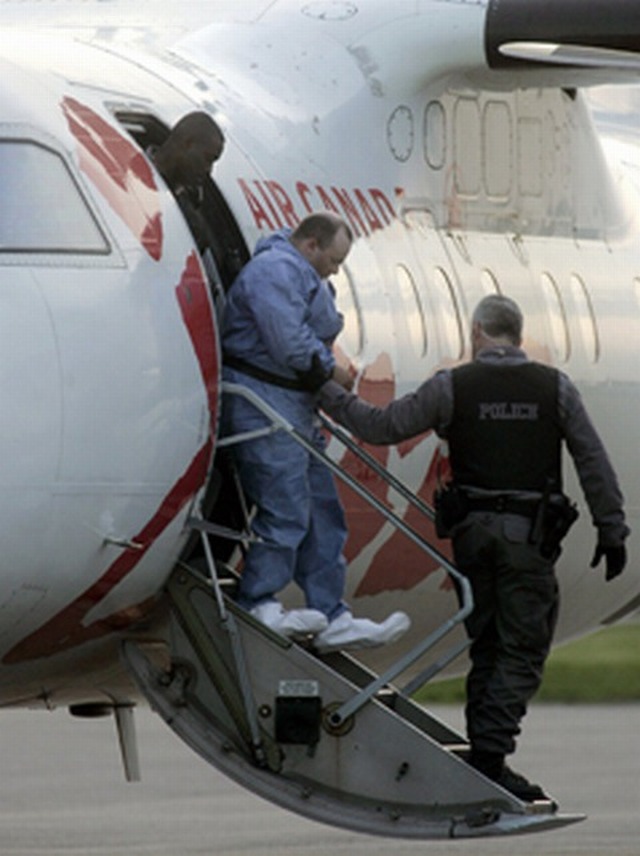
Pierre Aragon is led into the Peterborough Superior Court of Justice Friday, Sept. 7, 2017. Aragon was declared a dangerous offender Friday, receiving an indeterminate sentence.  

Former outlaw motorcycle gang member Pierre Aragon will remain behind bars until his sentencing hearing in 2023 after being denied bail by Justice Jocelyn Speyer. Earlier this year, the Ontario Court of Appeal set aside Aragon’s dangerous offender designation, and ordered a new sentencing hearing. Aragon also appealed his conviction, but Ontario’s top court upheld the jury’s verdict.


‘There is strong evidence his risk has decreased’: Former Peterborough outlaw motorcycle gang member to be released from prison

Pierre Aragon will be supervised by Correctional Service Canada (CSC) when he is released from custody next month

Pierre Aragon is escorted by Peterborough police members during his dangerous offender hearing in 2017. - Examiner file photo

After spending over a decade behind bars, former violent outlaw motorcycle gang member Pierre Aragon will be released from custody next month.

However, the 41-year-old won’t completely be a free man as he’ll be under the watchful eye of Correctional Service Canada (CSC) for the next 10 years after he was found to be a long-term offender.


Former Bandidos enforcer wins appeal of dangerous offender ruling in baseball bat beating

Although Pierre Aragon’s convictions will stand, the recent appeal ruling means he has won another hearing on the Crown’s position he is a dangerous offender who can be held for an indeterminate prison term.


Pierre Aragon arrives at the Petebrorough Superior Court of Justice for his dangerous offender hearing on May 11, 2015

A former member of the “No Surrender Crew” of the GTA-based Bandidos Motorcycle Club has won an appeal of his indeterminate prison term after he was convicted of taking a baseball bat to a York Region rival.

In the same Ontario Court of Appeal decision released earlier this year, Pierre (Carlito) Aragon lost an appeal of his related convictions for aggravated assault, assault with a weapon, possession of a weapon for the purpose of committing an offence, and uttering a threat to cause bodily harm stemming from the baseball bat attack.

The charges were for his role in the severe beating of Fernando Fernandes of the Woodbridge Loners Motorcycle Club shortly before 1:30 a.m. on July 22, 2012, outside a motorcycle gang clubhouse in Peterborough.

The attack followed a bitter internal club dispute within the Loners, when Peterborough members quit the group en masse.

Fernandes couldn’t identify his attackers, as he was intoxicated at the time of the beating, when he suffered a brain injury.

Fernandes also required 60 stitches and a plate was inserted in his left elbow after he was repeatedly clubbed.

Aragon was originally designated as a dangerous offender and sentenced to an indeterminate sentence.

Although Aragon’s convictions will stand, the recent appeal ruling finds his sentencing judge failed to “offer sufficient explanations for important rulings made in the course of the sentencing hearing.” The ruling calls for a new hearing on Aragon’s sentence and the Crown’s dangerous offender application, to be heard by a new judge.

Some of the evidence used to convict Aragon in his original trial came from an accidental pocket dial the Crown said he made while he was pummelling Fernandes.

In the accidental audio recording from Aragon’s cellphone, a male voice can be heard saying: “Here, give me that bat … No, I won’t, I’m breaking his knees.”

Shortly after that, a male voice can be heard saying: “You had the only chance to come away. You’re so stupid. What, are you a Loner? … You want to be a Loner? That’s for the Loners. Fernando you had a chance to come with us.”

A woman’s voice was recorded saying, “Baby enough” and a male voice responded, “Get the f—- outta’ here, b——.”

The Crown said that the phone which made the call was the same one found on Aragon when he was arrested.

DNA evidence from one of the baseball bats was also used by the Crown in securing the conviction.

It took a Peterborough jury less than three hours to convict Aragon of the charges on April 22, 2014.

The prosecution case was bolstered by video recordings made by police covertly across the street from a Peterborough biker clubhouse.

Aragon had been a member of the “No Surrender Crew”; eight members and associates of his crew were murdered in 2006 by fellow Bandidos and associates in a barn near the hamlet of Shedden, Ont., outside London.

A biker-turned-police-informant told the murder trial of the six men convicted of the 2006 massacre that Aragon was in Winnipeg days before the massacre.

Aragon is also a former sergeant-at-arms of the Loners, a position for someone who enforces club discipline.

Aragon’s criminal record includes pleading guilty to aggravated assault in 2008 for his role in the gang-related killing in 2005 of Shawn Douse, 35, of Keswick.

Douse was tied up, beaten and left in a Pickering woodlot, where his body was torched.

In 2017, Aragon was in custody for assault with a weapon when he unsuccessfully tried to sue the Queen and provincial government for more than $2 million because he was unhappy with his jail accommodations.

While an inmate at the Toronto East Jail, Aragon unsuccessfully argued that his “basic human rights” are violated by his daily jail schedule, which included being locked in his cell for breakfast, lunch and supper, as well as overnight.

Monday, November 12, 2018

Former Bikers mansion to be demolished in Peterborough’s south end

By 
October 27, 2017

There is a mansion in Peterborough’s south end that has sat abandoned and in decrepit shape for years.
It was the home of the convicted drug dealer and biker Robert Pammett and now it’s up for demolition.

Demolition is set to begin Tuesday, Oct. 31st of the former mansion of convicted drug dealer and biker Robert Pammett.
The property located on McNamara Road was the site of a major police drug squad investigation in 2008 when Pammett sold a large quantity of cocaine from inside the house to an undercover officer which lead to his subsequent arrest and the home has sat vacant since then.
The federal government seized the mansion in 2012 and then Pammett, in 2015, appealed to have his property returned but lost the decision in the courts.
The city was then able to purchase the property in 2016, acquiring the 2.8 acres of land from the crown for $100,000.
“Anytime that we are able to purchase property along any of our waterfronts, whether it be Little Lake or the Otonabee River, we definitely have the policy to secure that for public enjoyment,” said city CAO Allan Seabrooke.”This property definitely falls into that category.”
Plans are now in place to turn the land into a public green space, as the city will partner with the Ontario Federation of Anglers and Hunters to turn the property into a public park.
“The building and its former owners have brought much negativity to Peterborough over the years and we are certainly looking forward to erasing that,” said OFAH executive director Angelo Lombardo.
The demolition will begin Tuesday, Oct. 31st, and cost the OFAH $100,000, the city will still own the land but the wildlife agency will become the curator of the park.
“The park is going to be available to all residents of the City of Peterborough and visitors free of charge,” said Lombardo. “Enhancements will include things like interpretative trails, pollinator gardens, picnic and shade structures.”
The OFAH says it will be able to expand its programs and will also start a fundraising campaign next week to help raise $150,000 to complete phase two of the park’s design.

Former GTA Bandido biker loses top court appeal

Former Bandido biker sues jail and Queen for more than $2M for ‘loss of dignity, pain and suffering’

By 

None of the allegations filed with the Superior Court of Justice in Toronto have been proven in court.
The province has until January 23 to reply to the allegations.
Aragon is currently an inmate at the Toronto East Jail.
Aragon belonged to the Bandidos at the time of the 2006 massacre of six members and associates by fellow members and associates in a barn west of London, Ont.
He was in custody for his role in the death of Keswick drug dealer Shawn Douse at the time of the massacre.
Aragon was transferred to the Toronto East Detention Centre from Lindsay in August.
He is awaiting sentencing after he was convicted of aggravated assault, assault with a weapon, possession of a weapon and uttering death threats.
His sentencing has been delayed as the Crown has sought a dangerous offender designation for him.
His statement of claim alleges he’s suffering from “loss of general enjoyment of life” and an inability to “sustain interpersonal relationships” as a result of his jail time.
“The Defendant, Her Majesty the Queen in Right of Ontario… is responsible and liable for the actions occurring within The Ministry of Community Safety and Correctional Services…,” Aragon’s statement of claim states.
“Her Majesty is vicariously liable for the negligence and/or breaches rights of the Plaintiff,” he alleges.
Aragon alleges that his “basic human rights” are violated by his daily jail schedule, which includes being locked in his cell for breakfast, lunch and supper, as well as overnight.
“The Plaintiff was subjected to extremely invasive strip searches on an abnormally frequent basis,” his statement of claim alleges. “These strip searches resulted in increased anxiety, psychological damage, depression and nightmares. The excessive and invasive strip searching was demeaning, unnecessary and cruel treatment. Random cell searches were deliberately destructive, leaving cells in a state of disarray, with personal items left broken and/or missing.”
He also claims that an inadequate diet has left him “constantly hungry” and suffering from “depression, weight gain, inability to concentrate, difficulty sleeping and other health problems.”
Other complaints include lack of timely medical care, poor air quality, not enough showers, limited telephone time, lack of mental stimuli in the form of reading matter and radio and television, and shoes that aren’t adequate for his exercise needs.
He argues these conditions violate what the United Nations General Assembly calls the “Mandela rules,” named for the poor conditions experienced by the late Nelson Mandela when he was in custody.
In January 2008, Aragon was one of four men connected to the Bandidos who were sentenced to penitentiary terms after pleading guilty to the fatal beating of Douse.
Whitby court heard that Aragon and the other bikers ignored Douse’s pleas for mercy after he was lured to a townhouse in Keswick on Dec. 6, 2005.
“This was a vicious, senseless, callous and cowardly killing,” Mr. Justice Edwin Minden said before passing sentence.
That sentencing came months after the U.S.-based Bandidos closed their Canadian chapters after a spate of criminal convictions.
Court heard a T-shirt was stuffed into Douse’s throat to kill him after he was beaten unconscious.
Aragon pleaded guilty to aggravated assault for his role in Douse’s death and was sentenced to three years and 11 months in custody.
Douse’s body was found in a North Pickering field on Dec. 8, 2005 by a man walking his dogs.
He had been set on fire and his hands and feet were bound. His mouth was gagged and a bag was over his head.

The six jailed Bandidos hoped the Supreme Court of Canada would let them appeal their eight murder convictions

BY DAN BROWN
April 7, 2016


It was the bloodiest mass murder in Ontario’s modern history, and the horrific crime in London’s backyard was revealed to the world a decade ago today.

April 8, 2006, has gone down in infamy as the day when the bodies of eight bikers were discovered on a lonely dirt road near Shedden. The slayings would collectively come to be known as the Bandidos Massacre.
And at least one person who studies the behaviour of biker-gang members believes it could all be repeated. “It’ll happen again,” Yves Lavigne, a Toronto author who specializes in tales of organized crime, told The Free Press. “I don’t think any biker has learned anything from it.
“It would be laughable if lives weren’t lost.”
Meanwhile, a veteran London lawyer who represented a former police officer charged with eight counts of first-degree murder said the marathon trial at the London courthouse was a once-in-a-lifetime experience.
“The trial was like a PhD in criminal law,” Gord Cudmore said.
Eight members of the Bandidos motorcycle club, the “No Surrender Crew” from Toronto, were murdered at Wayne Kellestine’s Dutton-Dunwich farm. Kellestine and his Winnipeg crew had been instructed to “pull the patches” of the Toronto bikers, effectively kicking them out of the club.
All were shot, their bodies found stuffed in abandoned vehicles dumped a few kilometres away from Kellestine’s address.
Thursday morning, one day before the 10-year anniversary of the discovery of the bodies, the Supreme Court of Canada said it would not hear the appeals of three of the six men convicted of killing their fellow bikers, bringing the long legal saga to a close.
What stands out for Lavigne today is how the slaughter was, for lack of a better term, an amateur act: “Bikers are not the smartest people. Or wannabes.”
Lavigne says, if anything, the ranks of criminal biker clubs have become even more watered-down in the last 10 years.
“It’s like the NHL. They expanded too fast and too much,” he said. “Now they’re just recruiting anyone. How can they call themselves a motorcycle club” when some recruits don’t even know how to ride a motorbike? “You don’t romanticize these people,” Lavigne said.
There are not enough quality recruits for all of the gangs that have a presence in Southwestern Ontario. Lavigne includes among that number the Hells Angels, the Outlaws, the Vagabonds and the Para-Dice Riders.
“These guys were all rejects from other gangs,” he said of both the killed and the killers. “These guys were the class dummies.”
“So the lesson in Shedden is: Don’t try to be something you’re not.”
Cudmore, who represented Michael Sandham, a former police officer in Manitoba, said the trial took more than an emotional toll on him.
“I broke my hip about halfway through the trial,” he recalled. “I fell at the cottage, it was a total freak accident and I ended up in surgery.” The injury left him using a walker, then a cane, without the strength even to walk across the courtroom to question witnesses.
When Cudmore heard about the grisly discovery near Shedden, he didn’t know he would come to be involved in the case that followed. “There were eight murders, which made it unusual. There were a lot of lawyers involved, which means lots of disagreements,” he said.
“Every issue that could come up, did come up,” Cudmore said, including questions of evidence admissibility, self-defence and conspiracy.
“It was a fascinating experience. I’m glad I did it. And I’d never do it again.
SLAIN IN THE MASSACRE
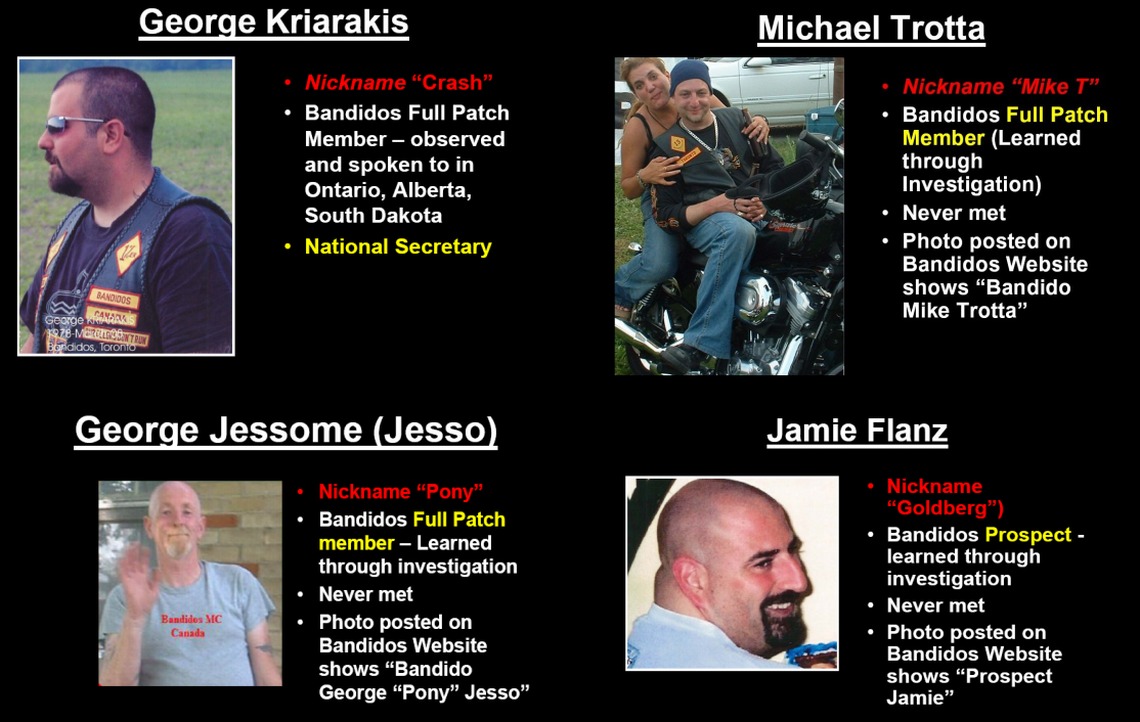
George (Pony) Jessome, 52
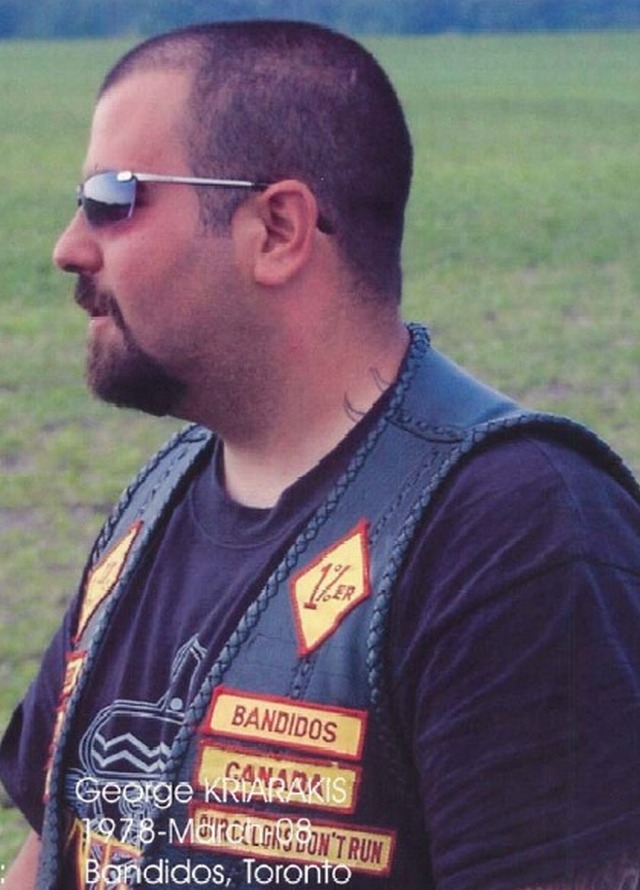
George (Crash) Kriarakis, 28
John (Boxer) Muscedere, 48
Luis Manny (Chopper) Raposo, 41
Frank (Bam Bam) Salerno, 43
Paul (Big Paulie) Sinopoli, 30
Jamie (Goldberg) Flanz, 37
Michael (Little Mikey) Trotta, 31
THE VERDICTS
Wayne Kellestine, 65, Frank Mather, 41, Brett Gardiner, 30, Marcelo Aravena, 38, Dwight Mushey, 47, Michael Sandham, 45, convicted on Oct. 29, 2009 after seven-month jury trial in London.
Kellestine, Mushey and Sandham each convicted of eight counts of first-degree murder.
Mather and Aravena found guilty of one count of manslaughter and seven counts of first-degree murder.
Gardiner found guilty of two counts of manslaughter and six counts of first-degree murder.

Friday, July 6, 2018

Attorneys for convicted ex-Bandidos leaders request acquittals, new trials

SAN ANTONIO - Attorneys for two former leaders of the Bandidos filed separate requests for acquittals and new trials, with both raising questions surrounding the testimony from an FBI agent they said was based on hearsay. Jeffrey Fay Pike and John Xavier Portillo were convicted in May on charges of racketeering, drug dealing, extortion and multiple murders. The trial lasted more than three months and included testimony from Bandidos members, as well as FBI Agent Scott Schuster, who testified as an expert on the gang. Attorneys for both Pike and Portillo questioned Schuster's testimony primarily on the basis that his testimony was "hearsay" and that "he was shown merely to be an investigator and a recounter of stories he had come across during his investigation of the Club." Prosecutors said Schuster's testimony was specific to the structure, rule and operations of the Bandidos and that it "was fully corroborated by multiple Bandido members who themselves later testified for the government." Pike's attorney even disagreed with the representation of the Bandidos during trial.
"The Bandidos Motorcycle club is made up of men who share an ethos of freedom realized on the road, brotherhood manifested in shared gatherings, and enthusiasm directed at motorcycles. The club has autonomous, self-governing local chapters in Texas and 15 other states. Not unexpectedly in a large and diverse group, individual members sometimes act up: they get in fights with individuals from other motorcycle clubs at bars and on the roadside; they break the rules of the club against drug sales; they mistake an ethos of freedom and liberty for one of license and violence," Pike's attorney wrote. "The Government wished to see the Bandidos as an entity in which the bad acts of a few members made criminals of the entire club, positing the theory of respondeat superior, that Pike, as president of the National Chapter had knowledge of (or willfully blinded himself to) the individual crimes committed by members of the BMC and that he approved." Prosecutors said there was ample evidence the Bandidos committed robbery, extortion, racketeering, drug trafficking and murder -- all with Pike's knowledge. "The evidence showed that Pike instructed Bandidos members to murder (Anthony) Benesh after Benesh refused to stop wearing his Hell's Angels colors in Texas. The jury also heard evidence that members of the conspiracy routinely used firearms to kill rivals, for example, in the murders of Robert Lara and Geoffrey Brady. They also heard evidence that it was commonplace for Bandidos members to carry firearms and take with them when they were expecting potential confrontation with rivals," prosecutors said. Portillo's attorney also questioned the court's decision to allow information to be presented to the jury on George Wegers, the former president of the Bandidos who pleaded guilty to a RICO indictment in 2005.
"The only purpose of that evidence was to show that the Defendants must be guilty because they are high ranking officers, just like the previous president, who was indicted (just like these defendants) and pled guilty," the court document said. But prosecutors said it was relevant because Pike served as Wegers' national vice president from 1999 until he took over as the president in 2005 -- after Wegers' guilty plea. "Defendants in trial argued that the Bandidos chapters were autonomous and they did not know that other Bandidos members engaged in criminal activities -- this evidence undermined that argument. To the contrary, that the National President was being charged with racketeering crimes supported the argument that Portillo and Pike had knowledge that the Bandidos enterprise was engaged in racketeering activity. Evidence of the National President being charged with racketeering crimes was a significant event in Bandidos history. And because both Portillo and Pike were fellow members of the national chapter at the time, it affected them both and certainly seems implausible that they did not know about Wegers being charged. Moreover, the United States later elicited testimony that Bandidos members, including Pike, obtained Wegers legal paperwork in an effort to educate themselves so they could guard against future law enforcement efforts." A federal judge will likely rule on the motions for acquittal and new trial sometime this summer. Portillo's sentencing will be on Sept. 24 and Pike's sentencing will take place on Oct.1. https://www.ksat.com/news/attorneys-for-convicted-ex-bandidos-leaders-request-acquittals-new-trials

Verdict reached in racketeering trial of top ex-Bandidos leaders

On the three-year anniversary of Texas’ deadliest biker shootout, jurors in San Antonio found the two top former Bandidos leaders guilty of all charges they faced in a racketeering indictment. After two days of deliberations, the eight men, four women jury returned a unanimous verdict against former Bandidos national president Jeffrey Fay Pike, 62, of Conroe, and ex-vice president John Xavier Portillo, 58, of San Antonio, on all counts each faced in a 13-count indictment.
Former Bandidos national president Jeffrey Fay Pike, 62, of Conroe, leaves the Federal Courthouse on Thursday, May 17, 2018. Pike and ex-vice president John Xavier Portillo, 58, of San Antonio, were found guilty on 13-counts of racketeering and murder. The crimes include racketeering conspiracy, murder, extortion and drug dealing (or aiding and abetting the crimes). Some involved the killings of rival bikers by other Bandidos members.
Pike and Portillo were arrested in separate raids on Jan. 6, 2016, over allegations that they oversaw years of mayhem by members of the biker club that once reached overseas. The pair are charged in an indictment that was modified at least four times and contains 13 counts, though none of the charges were in relation to the May 17, 2015, shootout at Twin Peaks restaurant in Waco involving Bandidos, members of the Cossacks Motorcycle Club and police. That incident resulted in nine bikers being killed, 20 being injured and nearly 200 being arrested on state charges that later crumbled under the direction of the state prosecutor, McLennan County District Attorney Abel Reyna. The San Antonio case did not involve Reyna’s office, but was prosecuted by the U.S. Attorney’s Office in San Antonio and was part of an investigation that had already been ongoing before the Twin Peaks shootout. In a trial lasting nearly three months in federal court in San Antonio, the two leaders challenged the government’s contention that they were the crime bosses of what the feds called “the mafia on two wheels.” Pike was national president of the Bandidos from mid-2005 until he stepped down in January 2016 after his arrest, and has been out on bond ever since. Pike picked Portillo as his national vice president in 2013, and he had been in that position until he was arrested. Portillo was denied bond and has been in jail since his arrest. The judge ordered Pike into custody after the verdict, and set his sentencing for October. The judge set sentencing for Portillo in September.